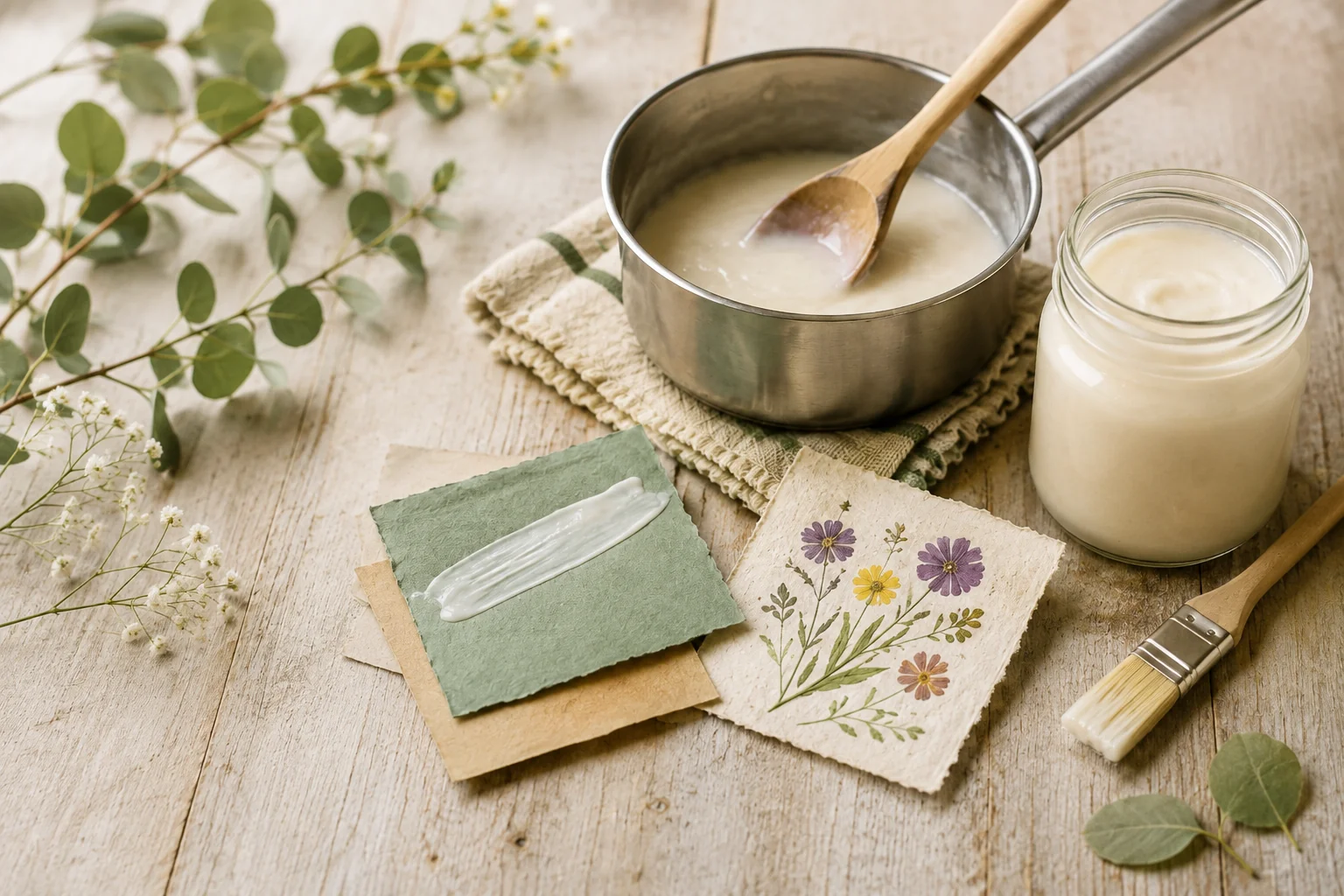
How to Make Homemade Flour Glue
Introduction
Homemade flour glue is one of the simplest adhesives you can make with ingredients already in the kitchen. Flour and water cook into a smooth paste that works well for lightweight paper crafts, papier-mâché, collage, and other temporary projects.
It is inexpensive, easy to make in small batches, and useful when you need a basic craft adhesive without buying another bottle of glue.
Flour glue does have limitations. It is not waterproof, archival, or suitable for projects that need a strong permanent bond. Because it is made from food ingredients, it can also spoil or develop mold if stored too long.
For simple paper projects, though, it does the job surprisingly well.
Homemade Flour Glue Recipe
Ingredients
- 1/2 cup all-purpose flour
- 1 cup water
- Pinch of salt, optional
Equipment
- Small saucepan
- Whisk or spoon
- Measuring cups
- Small jar or airtight container
How to make flour glue
1. Combine the flour and water
Add the flour and water to a small saucepan.
Whisk until most of the lumps disappear. The mixture will be thin at first.
2. Cook the mixture
Place the saucepan over medium-low heat.
Cook while stirring frequently until the mixture begins to thicken. This usually happens fairly quickly once the water heats.
Continue stirring so the flour does not stick to the bottom of the pan.
3. Adjust the consistency
Remove the glue from the heat when it reaches the consistency of a thick cream or loose pudding.
Keep in mind that the glue will thicken slightly as it cools.
If it becomes too thick, whisk in a small amount of warm water until it reaches the consistency you want.
If it is too thin, return it to low heat and cook for another minute or two.
4. Let it cool
Allow the glue to cool completely before using it on paper or craft materials.
Transfer the finished glue to a clean container.
How to use homemade flour glue
Apply a thin layer with a paintbrush, foam brush, craft stick, or your fingers.
A little goes a long way. Using too much glue can saturate paper and cause wrinkling or long drying times.
Press the pieces together gently and allow the project to dry completely.
For papier-mâché, the glue can be slightly thinner than you would use for collage or paper assembly. Add a small amount of water if needed.
What can you use flour glue for?
Homemade flour glue works best for lightweight, porous materials.
Good uses include:
- Papier-mâché
- Paper collage
- Children’s paper crafts
- Handmade paper projects
- Temporary paper decorations
- Paper labels
- Cardboard crafts
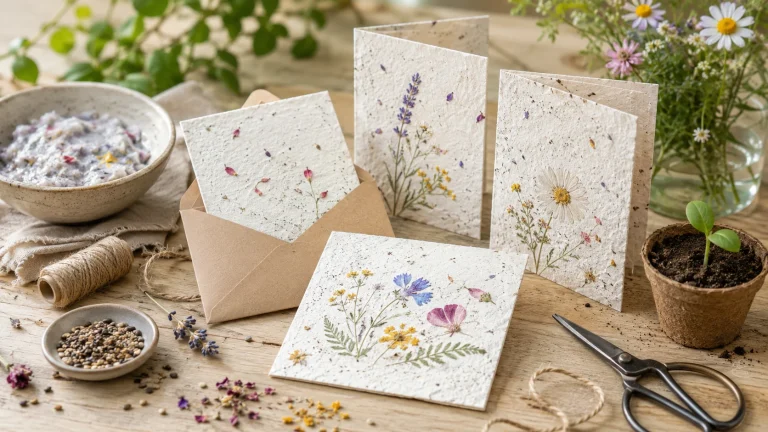
- Plantable seed paper greeting cards, especially for attaching lightweight paper elements to the card base while keeping the seed-paper portion removable
It can also be useful when making handmade paper because small amounts of starch-based paste can help bond paper fibers or attach lightweight decorative elements.
What should you avoid using it for?
Flour glue is not the best choice for projects that need to last for years or withstand moisture.
Avoid using it for:
- Outdoor crafts
- Waterproof projects
- Archival photographs or documents
- Heavy materials
- Furniture or wood construction
- Fabric projects that will be washed
- Projects that will be exposed to high humidity
Because starch-based adhesives can also attract pests under poor storage conditions, avoid using homemade flour glue for valuable or archival paper projects
How to store homemade flour glue
Store leftover glue in a clean, airtight container in the refrigerator.
Because flour glue contains no commercial preservatives, make small batches and use them quickly.
Discard the glue if it develops an unusual smell, visible mold, discoloration, or significant separation.
Bringing the glue to room temperature before using it can make it easier to spread.
Can you make flour glue without cooking it?
You can mix flour and water into a raw paste, and that version is sometimes used for papier-mâché.
Cooking the mixture produces a smoother adhesive with fewer lumps and a more consistent texture, so I prefer the cooked version for most paper crafts.
Tips for better flour glue
Keep the glue relatively thin when working with delicate paper. Thick layers can wrinkle the surface and take much longer to dry.
Apply glue from the center of the paper toward the edges to help control curling.
If you are working on a project you plan to gift, sell, or keep for a long time, test the glue on a sample first. Homemade adhesives behave differently depending on paper thickness, humidity, and how much glue is applied.
Final thoughts
Homemade flour glue is not trying to compete with every bottle in the craft aisle.
It is simply a useful, inexpensive adhesive for the kinds of paper projects that do not require waterproofing or archival durability.
With flour, water, a saucepan, and a few minutes of cooking, you can make enough glue for an afternoon of papier-mâché, collage, or recycled-paper crafting without adding another plastic bottle to the supply cabinet.