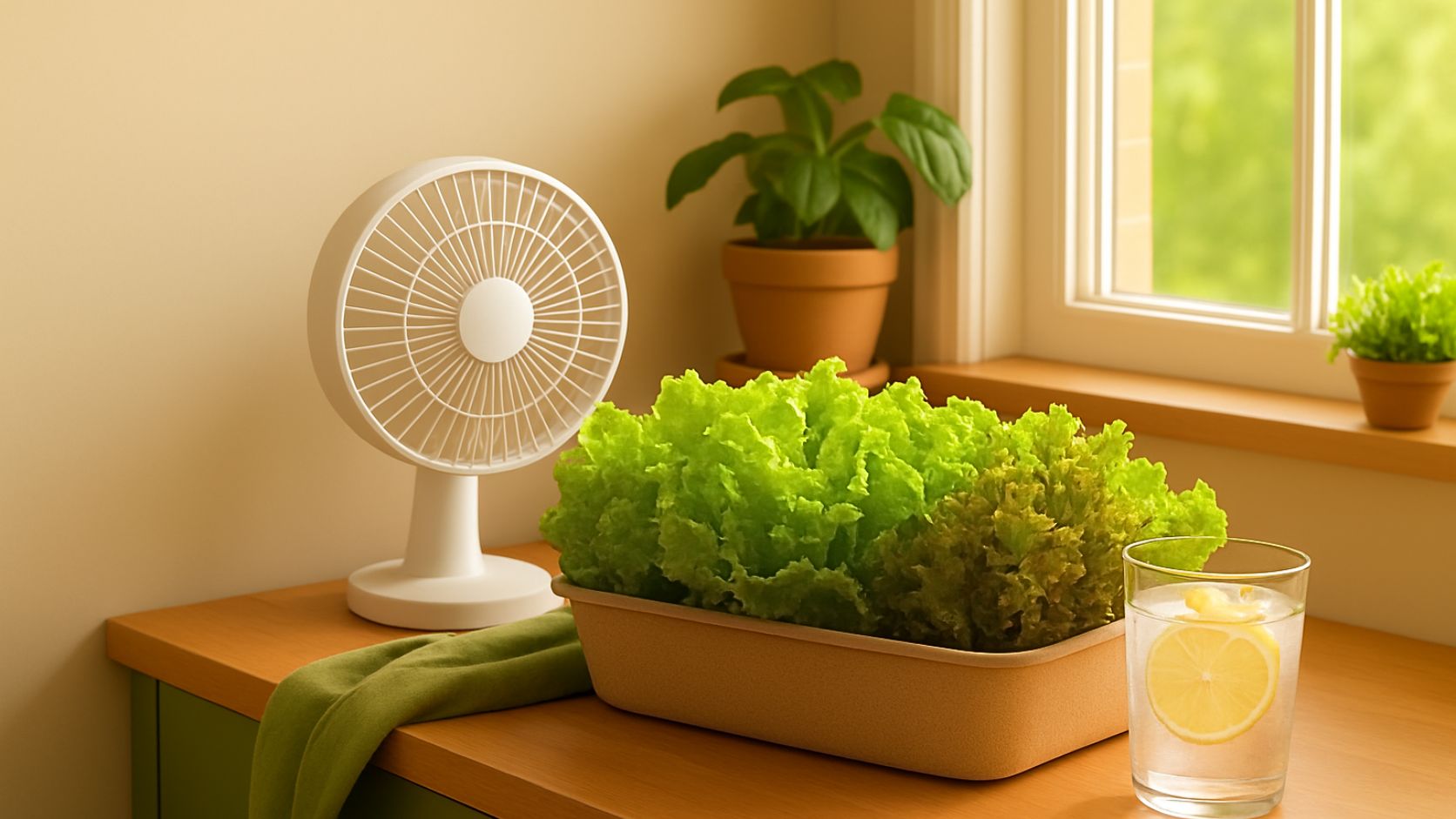
How to Grow Lettuce During Hot Weather
Introduction
Trying to grow lettuce in hot weather can feel like asking a cool-season crop to conduct civilized business in an open oven. High temperatures can slow germination, toughen leaves, increase bitterness, and trigger bolting.
Growing lettuce is easiest during cool weather, but that doesn’t mean summer has to end your harvest. With heat-tolerant varieties, afternoon shade, consistent moisture, and staggered planting, you can extend the season well beyond ideal lettuce weather.
Why It’s Hard to Grow Lettuce in Hot Weather
As temperatures rise, lettuce shifts from producing leaves toward reproduction. The center elongates, a flower stalk forms, and the leaves often become bitter. This process is called bolting.
Heat stress can also reduce germination. Seeds may remain dormant or germinate unevenly when the growing medium is too warm. Mature plants can wilt during the afternoon even when soil moisture is adequate.
Choose slow-bolting varieties
Seed descriptions that mention slow bolting, heat tolerance, or summer performance are useful starting points. Loose-leaf and some crisphead or Batavian types often handle warmth better than delicate varieties bred strictly for cool spring conditions.
Variety labels are not magic armor. A heat-tolerant lettuce may last longer, but sustained high temperatures will eventually push most plants toward bolting.
Use the coolest part of the day
One of the easiest ways to grow lettuce in hot weather is to protect it from intense afternoon sun. Morning sun with afternoon shade is often better than an exposed location receiving intense late-day heat. East-facing patios, the bright edge of a porch, or the north side of taller summer crops can provide useful protection.
Containers are mobile. Place them where they receive enough morning light, then move them into shade during severe heat if the setup allows.
Add shade cloth carefully
Lightweight shade cloth can lower leaf and soil temperatures while preserving enough light for growth. Suspend it above the plants so air can circulate rather than laying it directly on the leaves.
Avoid creating a dark, stagnant enclosure. Too much shade produces weak growth, while poor airflow encourages disease. Observe the plants and adjust the coverage as the season changes.
Keep roots cool
Wide, light-colored containers generally remain cooler than small dark pots exposed to direct sun. Mulching the surface lightly can reduce evaporation, although dense wet mulch around tiny seedlings may encourage rot.
Place containers where hot pavement or reflected wall heat will not cook the root zone. A plant stand, wooden board, or insulated outer pot can reduce heat transfer from concrete.
Water consistently
Lettuce has shallow roots and responds poorly to repeated cycles of drought and flooding. Check containers daily during hot weather, and water deeply enough to moisten the root zone without leaving the pot waterlogged.
Self-watering planters can reduce rapid drying, but reservoirs still require monitoring. A large reservoir is useful only when the overflow and drainage system works properly.
Start seeds in a cooler location
Germinate seeds indoors, in an air-conditioned room, or in another protected location when outdoor growing media remain too warm. Move seedlings outdoors gradually after they develop, taking care not to expose tender plants to sudden heat and sun.
Harvest young and often
Baby leaves mature faster and spend less time exposed to heat. Harvest outer leaves regularly or cut dense plantings while young.
Do not wait for every plant to form a perfect full-sized head. In summer, smaller frequent harvests are often more realistic and more tender.
Stagger plantings
Sow a small amount every one or two weeks rather than planting all seeds at once. If one batch bolts early, another may still be approaching harvest.
Staggering also helps you learn which planting dates and locations perform best in your micro-climate.
Use an indoor backup system
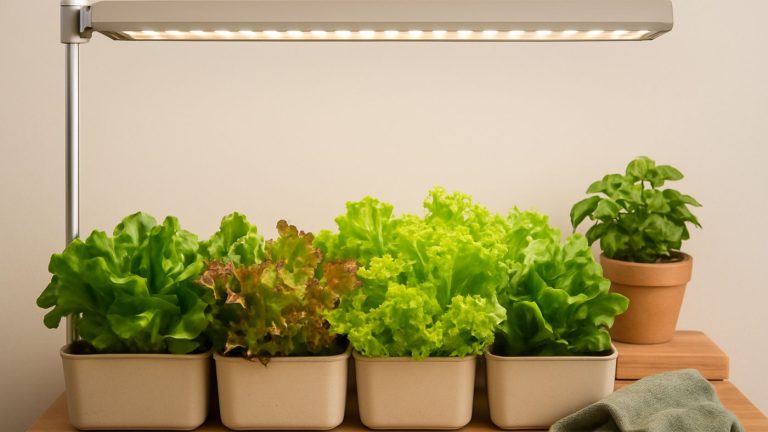
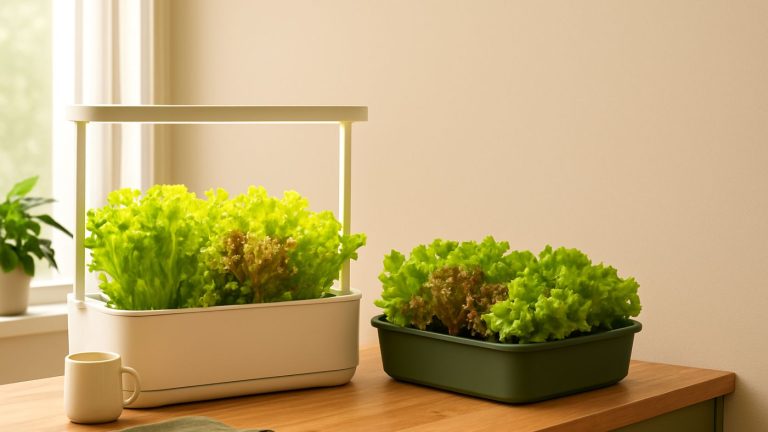
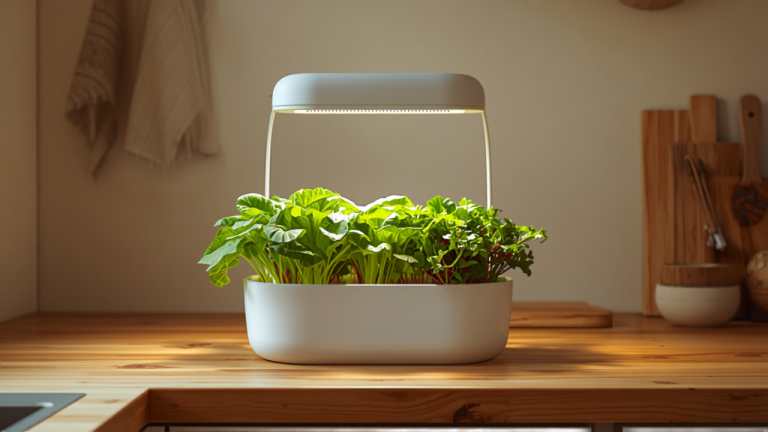
During the hottest part of summer, an indoor soil planter or countertop hydroponic garden can maintain production more reliably. Outdoor containers can resume when night temperatures begin to fall.
A seasonal indoor backup is not surrender. It is crop rotation with air-conditioning. If you’re new to growing greens indoors, start with my beginner’s guide to growing salad greens indoors before adapting your setup for summer heat.
When to stop fighting the weather
If seedlings repeatedly fail, plants bolt before producing useful leaves, or daily watering becomes excessive, pause outdoor lettuce and grow warm-season greens instead. Malabar spinach, longevity spinach, or other heat-loving leafy crops may suit your climate better, though they differ in flavor and texture from lettuce.
Use the hottest weeks to prepare containers, test shade, and plan the next cool-season planting.
Final thoughts
Hot-weather lettuce succeeds through moderation: heat-tolerant varieties, partial shade, steady moisture, short harvest cycles, and realistic expectations.
Treat summer lettuce as a sequence of experiments rather than one heroic crop. The notes you keep this season will become a custom planting calendar for your own patio, balcony, or garden.