How Much Light Does Indoor Lettuce Need?
Introduction
Light is the engine of an indoor salad garden. Lettuce can survive in weak light for a while, but survival is not the same as producing compact, tender leaves worth harvesting.
So, how much light does indoor lettuce need? In most indoor setups, lettuce grows best with a consistent daily period of bright light rather than relying on weak window light alone.
Indoor light changes with window direction, season, weather, curtains, and nearby buildings. A grow light turns those variables into a repeatable routine. The goal is not maximum brightness at any cost. It is enough usable light for steady growth without overheating or bleaching the leaves.
What indoor lettuce needs
Lettuce is a leafy crop, so it does not require the intense lighting used for many fruiting plants. It does need consistent light across the entire canopy. Plants receiving adequate light usually develop compact growth, broad leaves, and short spaces between leaf stems.
A practical indoor routine often uses a grow light for roughly 12 to 16 hours per day, followed by a dark period. Exact needs vary by light strength, distance, variety, temperature, and the amount of natural daylight the plants also receive.
Why a sunny window may not be enough
A window can look bright to human eyes while delivering weak or short-duration light to a plant. Glass, screens, roof overhangs, trees, and the angle of the sun all reduce usable light.
South-facing windows often provide the strongest light in the Northern Hemisphere, but even they may be inconsistent in summer storms or winter. East- and west-facing windows can work for supplemental light. North-facing windows are usually the least dependable for lettuce without a grow light.
Signs of too little light
Watch for stems that become long and thin, seedlings leaning hard toward the window, pale leaves, slow growth, wide gaps between leaves, or plants that flop over before developing a strong crown.
Moving stretched seedlings closer to a suitable light may improve new growth, but the elongated stems will not shrink. Severely stretched seedlings are often best replaced after the lighting problem is corrected.
Signs the light is too close or too intense
Leaves may curl upward, develop dry edges, bleach, or feel unusually warm when a light is too close. Heat can also encourage lettuce to bolt or become bitter.
LED fixtures produce less radiant heat than many older lamps, but the leaves can still become stressed. Follow the manufacturer’s distance guidance, then adjust based on plant response rather than assuming closer is always better.
Choosing a grow light
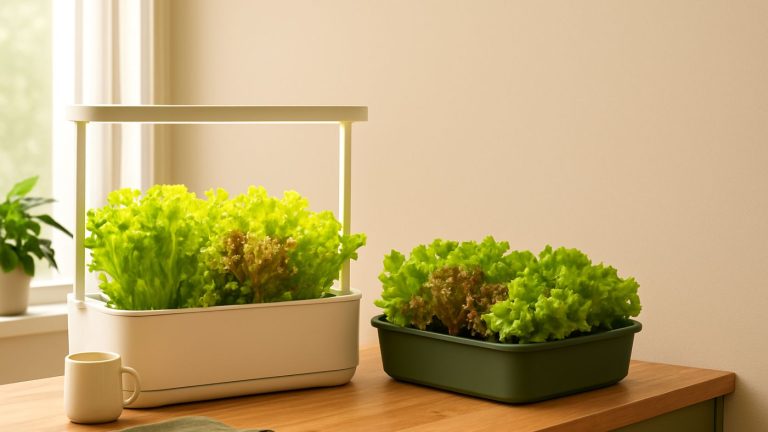
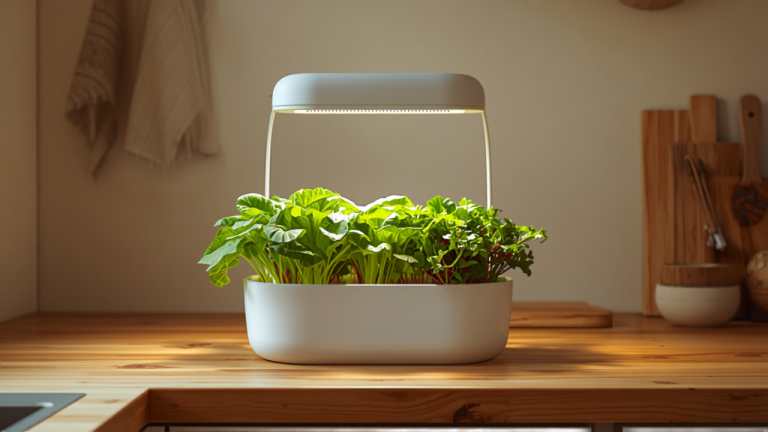
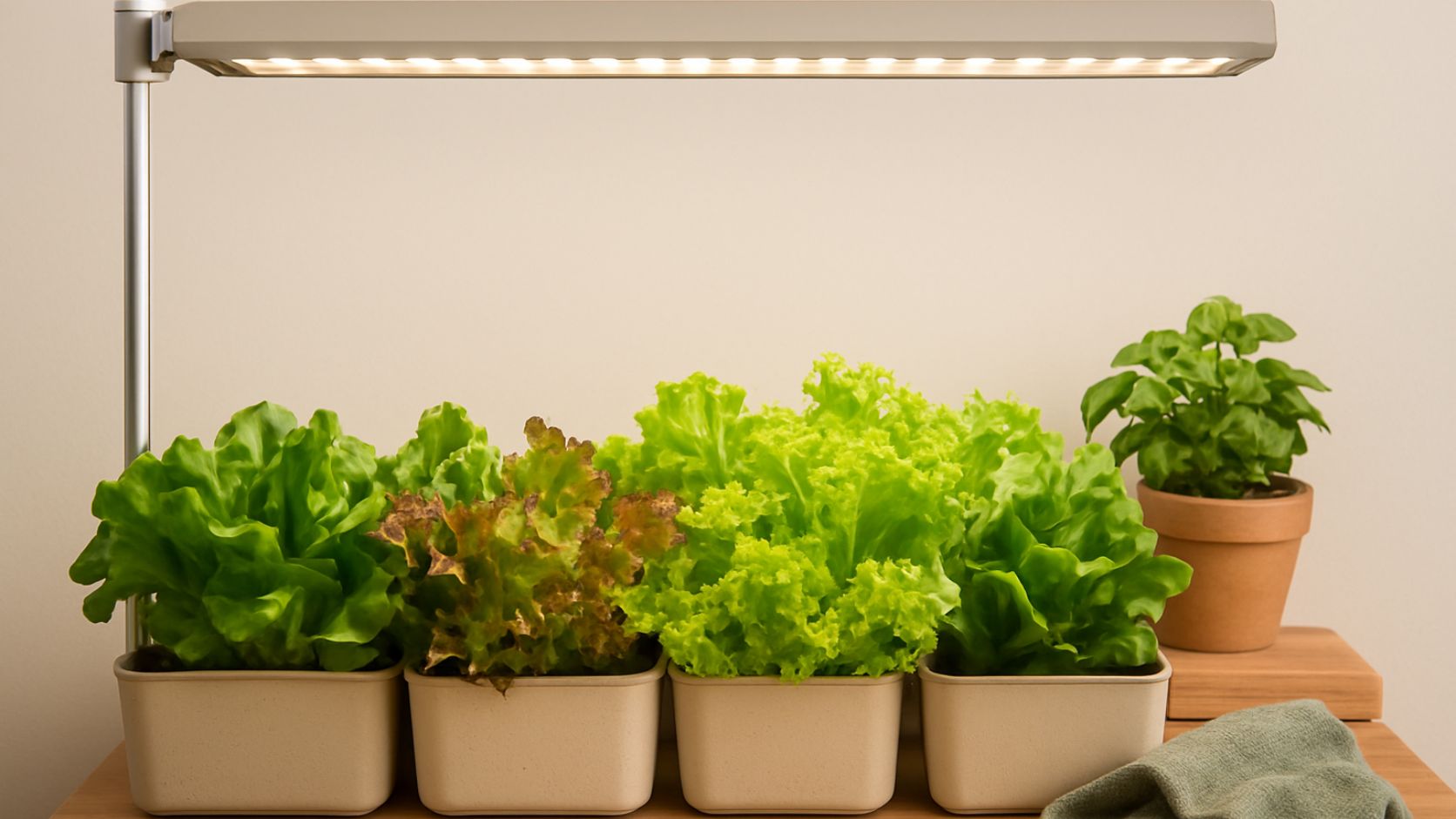
Look for a fixture that covers the entire planter rather than creating one bright spotlight in the center. Adjustable height is valuable because seedlings begin close to the light and mature lettuce needs more vertical clearance.
A built-in timer or external outlet timer reduces missed days and inconsistent schedules. For shelves, bar-style lights usually distribute light more evenly than a single small bulb.
Positioning the light
Center the fixture above the planter so all plants receive similar coverage. Keep it level rather than angled sharply from one side. Raise the light as plants grow to maintain the recommended distance.
If the outer plants lean inward or grow more slowly, the illuminated area may be too narrow. Use a wider fixture, reduce the planter width, or rotate the container regularly.
How Much Light Does Indoor Lettuce Need Each Day?
Choose a daily on-and-off schedule that fits your household. For example, a light can turn on early in the morning and switch off in the evening. Plants benefit from a regular dark period, and you benefit from not having a miniature sun glowing through the night.
Keep the schedule stable for at least a week before making major changes. Frequent daily adjustments make it difficult to identify what is helping.
Light and temperature work together
Lettuce prefers relatively cool growing conditions. A bright light in a warm, poorly ventilated corner can create heat stress even when the light level itself is appropriate.
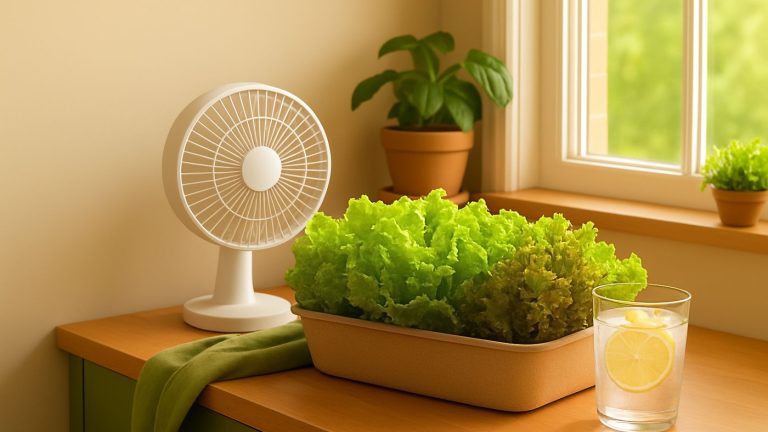
Keep the setup away from ovens, hot appliances, heating vents, and enclosed cabinets. Gentle airflow can reduce heat pockets and strengthen seedlings, but the fan should not dry the growing medium rapidly.
Can a light meter help?
Phone apps and inexpensive meters can help compare locations, but consumer readings are often better for relative comparisons than laboratory precision. Use them to learn which shelf or window is brighter, not as the only measure of plant health.
The plants remain the final instrument. Compact growth, healthy leaf color, and steady harvests indicate that the overall light routine is working.
Troubleshooting checklist
When growth is weak, check light distance, daily duration, canopy coverage, fixture cleanliness, timer settings, room temperature, water, and plant spacing. Correct one or two variables at a time and observe new growth.
If a light has been used for years, remember that output can decline even when the fixture still turns on. Compare plant performance with earlier crops or test a newer fixture if all other conditions appear stable.
Final thoughts
Indoor lettuce does not need a theatrical lighting rig. It needs a dependable, evenly distributed source placed at the correct distance for a consistent daily period.
Begin with the manufacturer’s guidance, watch the leaves, and keep notes. Within one or two plantings, your lettuce will make its preferences remarkably clear.
If you’re just getting started, my beginner’s guide to growing salad greens indoors walks through the entire setup from planting to harvest.