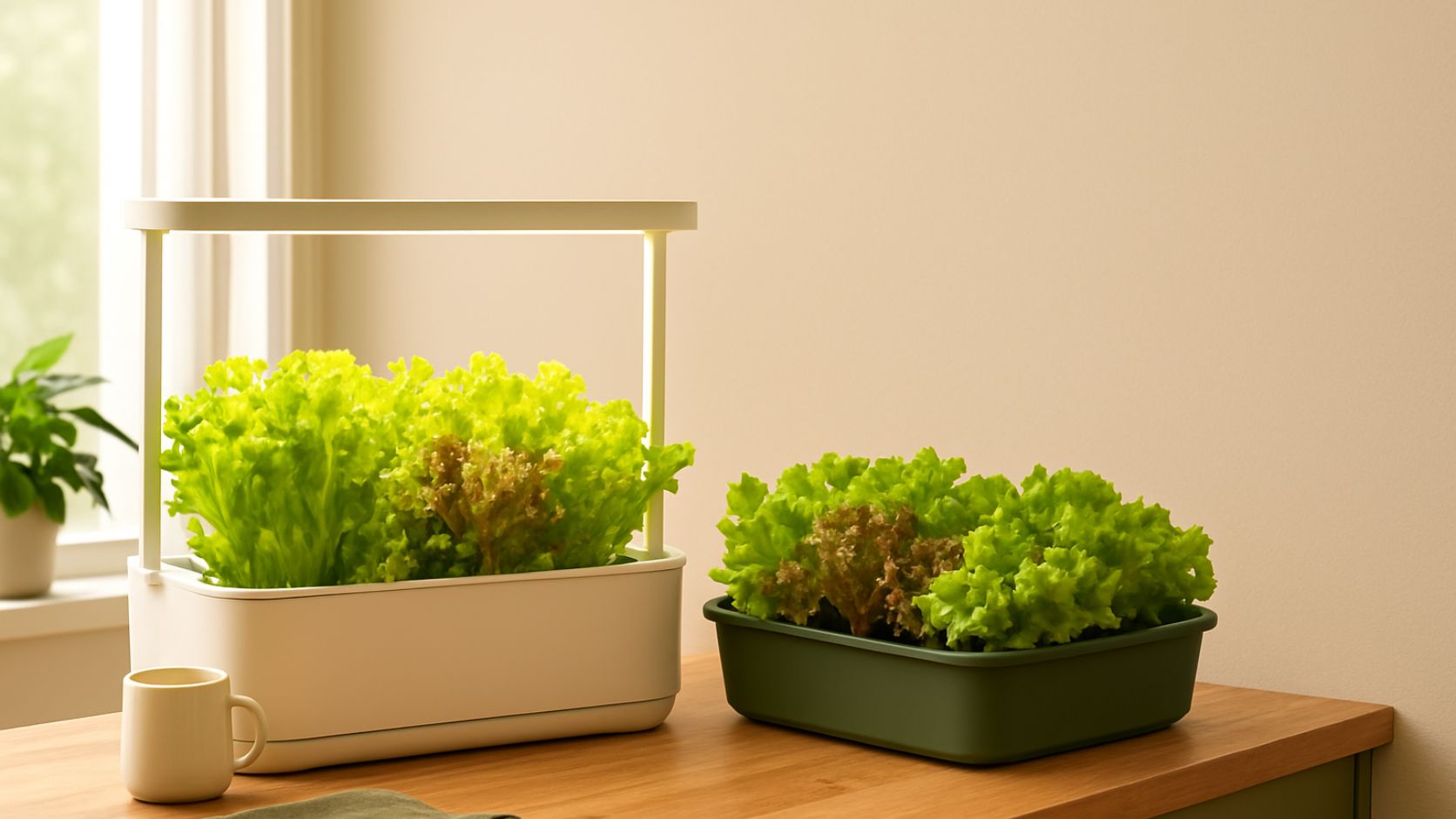
Counter-top Hydroponics vs. Soil-Grown Greens: Which Is Better for Beginners?
Introduction
Indoor salad greens can be grown successfully in either soil or a water-based hydroponic system. If you’re comparing hydroponics vs. soil for beginners, the best choice depends on how much space, maintenance, and hands-on growing you want.
Countertop hydroponic gardens package lighting, water, and plant support into one appliance. Soil setups are simpler and less expensive, but they ask you to choose the container, growing mix, and lighting separately. This guide compares the two methods without treating either one as the universal winner.
Quick comparison
Hydroponics is usually tidier and more automated, while soil is usually cheaper and easier to customize. Hydroponic systems depend on electricity, compatible parts, and nutrient solution. Soil setups depend on drainage, careful watering, and adequate light.
Choose hydroponics when convenience and a contained countertop setup matter most. Choose soil when you want a low-cost system that can expand one planter at a time.
How countertop hydroponics works
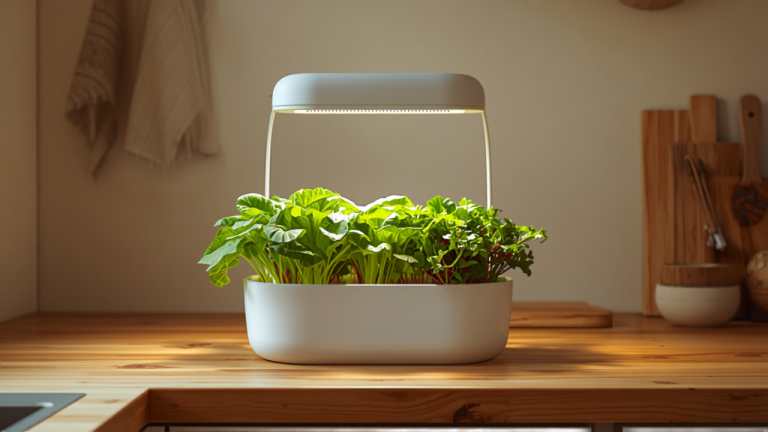
Most countertop systems hold water in a reservoir beneath a planting deck. Seeds germinate in sponges or plugs placed inside baskets. A built-in LED light supplies consistent illumination, and a small pump or circulation system helps keep water and oxygen moving around the roots.
The gardener typically adds water, measures or doses nutrients, adjusts the light height, thins seedlings, and cleans the reservoir between crops. The system simplifies several decisions, but it does not remove maintenance entirely.
How soil-grown indoor greens work
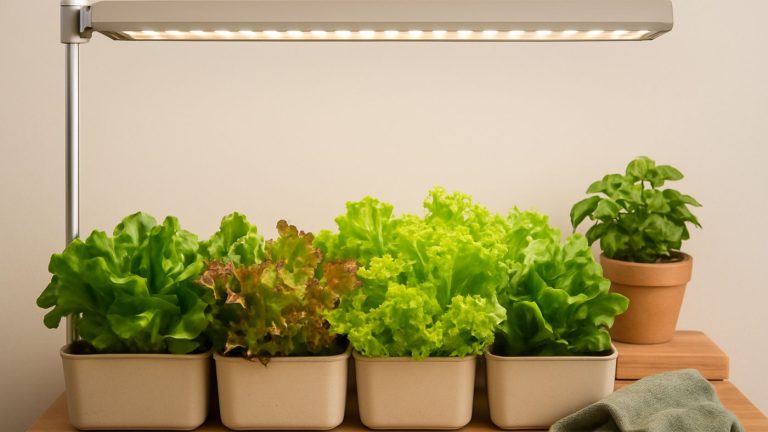
A soil-based setup uses a shallow planter with drainage, fresh potting or seed-starting mix, seeds, and either a bright window or grow light. Water and nutrients are held in the growing medium rather than a reservoir.
Soil gives roots a familiar buffer against minor mistakes, but small containers can still dry out or remain too wet. The planter must drain freely, and the surface should not stay saturated for long periods.
Up-front and recurring costs
A basic soil setup may require only a planter, tray, growing mix, and seeds. The largest optional expense is usually a grow light. A countertop hydroponic system costs more initially because it combines a light, reservoir, pump, and planting deck.
Recurring soil costs include fresh mix, fertilizer when needed, and replacement containers only if they wear out. Hydroponic costs may include nutrients, grow sponges, baskets, seed-pod covers, replacement pumps, and electricity. Before buying, check whether generic replacement parts fit or whether the system requires proprietary supplies.
Space and appearance
Countertop hydroponic gardens are designed to look compact and self-contained. They work well where a kitchen counter or sideboard has an outlet and enough clearance above the light. Their footprint is predictable, although mature leaves may extend beyond the base.
Soil planters come in many shapes and can fit windowsills, shelves, utility carts, or plant stands. They offer more flexibility, but trays, lights, cords, and watering supplies can make the setup appear less unified.
Daily and weekly maintenance
Hydroponic routines usually involve checking the water level, adding nutrients on schedule, inspecting roots, and preventing algae. A neglected reservoir can change quickly because all plants share the same water.
Soil routines involve checking moisture, watering evenly, emptying drainage trays, monitoring for fungus gnats, and rotating plants when window light is uneven. Individual containers can be isolated more easily when one develops a problem.
Cleanliness and household fit
Hydroponics avoids loose potting mix and can be appealing in kitchens or apartments. Water spills are still possible, and the reservoir must be cleaned thoroughly between plantings.
Soil can shed crumbs during planting and may attract fungus gnats when kept too wet. A waterproof work mat and careful watering keep most of the mess contained.
Growth and harvest expectations
Both methods can produce tender baby greens and loose-leaf lettuce. Hydroponic plants may grow quickly when light, nutrients, temperature, and water are well balanced. Soil-grown greens can be equally productive under a strong light with consistent moisture.
The method matters less than choosing suitable varieties, maintaining cool conditions, and harvesting regularly. Neither system guarantees an endless harvest. Older plants eventually bolt, become bitter, or lose vigor and should be replaced.
Hydroponics vs. Soil: Which Is Easier for Beginners?
Soil often gives beginners more room to learn because moisture and nutrients change gradually. However, overwatering can still suffocate roots and encourage pests.
Hydroponics makes water and lighting easy to observe, but errors in nutrient concentration, water temperature, sanitation, or pump function can affect the whole system at once. Beginners who like following a repeatable checklist may enjoy hydroponics; improvisational gardeners may prefer soil.
Best choice by gardener type
Choose a countertop hydroponic garden if you want an all-in-one appliance, dislike indoor potting mix, have limited natural light, and are comfortable buying replacement supplies.
Choose soil if you want the lowest-cost entry, enjoy experimenting with containers and varieties, want to expand gradually, or already own a suitable grow light.
A hybrid approach is also reasonable: use a countertop unit for lettuce and herbs while keeping inexpensive soil trays for dense baby-leaf mixes.
Buying checklist
For hydroponics, compare planting capacity, maximum light height, replacement-part availability, reservoir access, cleaning difficulty, timer controls, noise, and warranty terms.
For soil setups, compare planter depth, drainage, tray quality, grow-light coverage, light adjustability, timer access, and the cost of fresh growing mix.
Final recommendation
For the lowest-risk first experiment, begin with one shallow soil planter under a dependable light. For the most contained and guided experience, choose a countertop hydroponic garden with easily available replacement sponges and nutrients.
The better beginner system is the one whose maintenance you can picture yourself doing every week. A beautiful system that is awkward to clean will become countertop sculpture; a plain planter you check daily can become dinner.