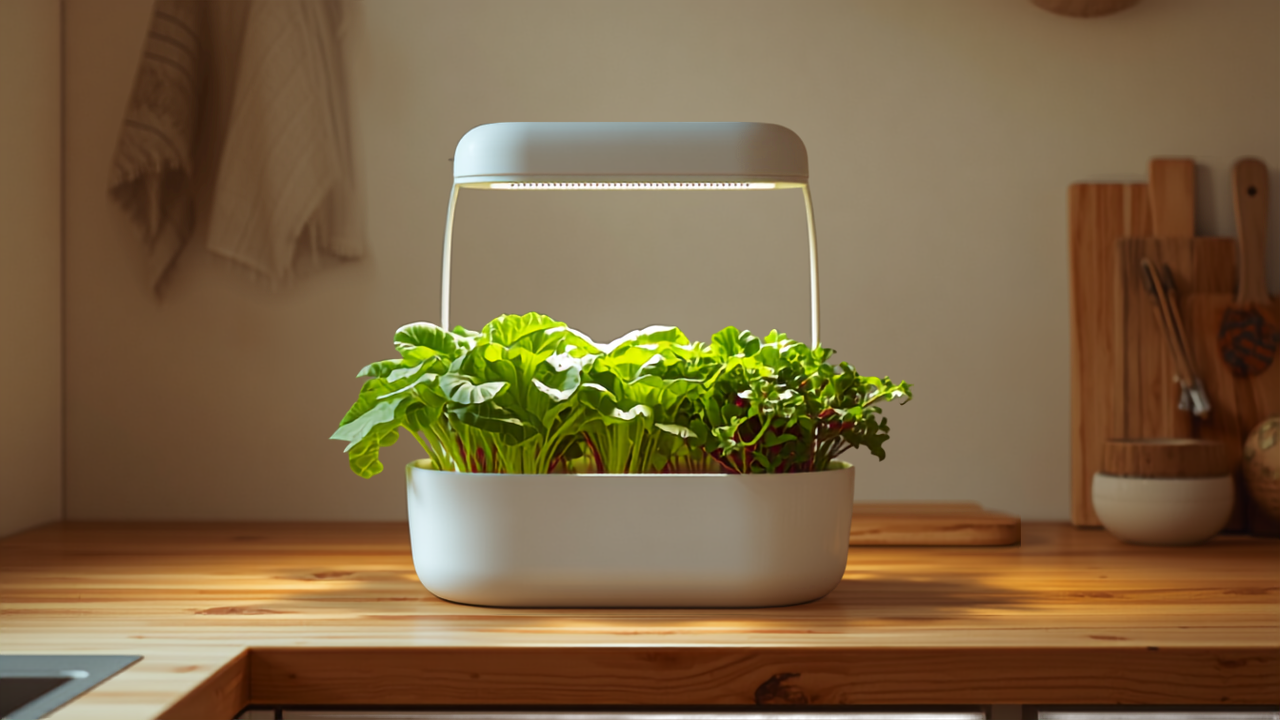
How to Grow Salad Greens Indoors: A Beginner’s Guide
You can grow salad greens indoors year-round, even if you don’t have a sunny window or much available space.
Introduction
Growing salad greens indoors is one of the easiest ways to begin producing food at home. You do not need a large garden, expensive equipment, or years of experience. A sunny window, compact grow light, shallow planter, or countertop hydroponic system can provide enough space to grow a small but steady supply of fresh leaves.
Indoor salad gardens work especially well for people living in apartments, dealing with extreme outdoor temperatures, or simply wanting greens within easy reach of the kitchen. Leaf lettuce, arugula, baby kale, mustard greens, and similar crops can be harvested while young, allowing you to grow food in less space than many traditional vegetables require.
This guide covers the two main growing methods, beginner-friendly varieties, basic supplies, lighting, planting, care, harvesting, and common problems. Because Indoor Greens for Beginners is a series, you’ll also find more in-depth guides to specific topics throughout this article.
Indoor Salad Garden at a Glance
- Best beginner crop: Loose-leaf lettuce
- Simplest low-cost method: Soil in a shallow planter
- Most convenient method: Countertop hydroponic system
- Main requirement: Strong, consistent light
- Harvest style: Baby leaf or cut-and-come-again
Soil or hydroponics?
Both soil and hydroponic systems offer healthy options to grow salad greens indoors. The better choice depends on your available space, budget, and how involved you want the setup to be.
Growing hydroponically
Hydroponic plants grow without soil. Their roots receive water, oxygen, and dissolved nutrients through a reservoir or other water-based system.
Countertop hydroponic gardens often include:
- A water reservoir
- Grow baskets or pods
- A built-in grow light
- Plant food
- A small pump or circulation system
Hydroponic systems are tidy and convenient, particularly when they include automated lighting and water reminders. They usually cost more initially and require compatible nutrients, replacement sponges, or other supplies.
Which is better for beginners?
Choose soil when you want the lowest-cost and most adaptable setup.
Choose hydroponics when you prefer an all-in-one system with built-in lighting and a more automated routine.
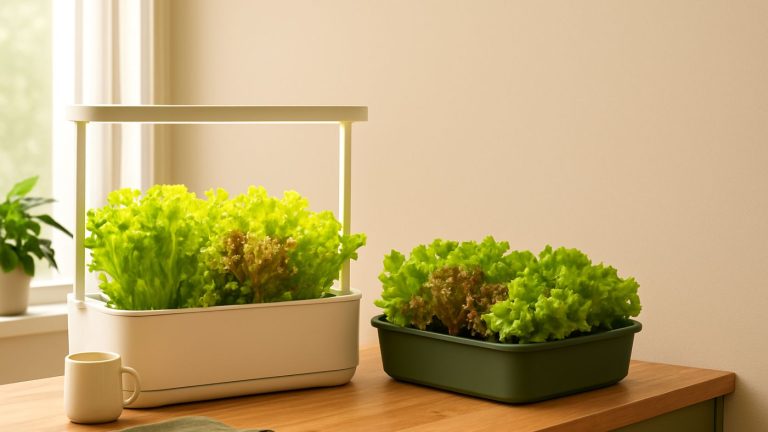
Neither method is automatically better. The best system is the one that fits comfortably into your home and is simple enough for you to maintain consistently. You can also learn more about soil-based and hydroponic growing systems from UF/IFAS Extension.
The easiest greens to grow indoors
Start with greens that tolerate close spacing and can be harvested leaf by leaf.
Leaf lettuce
Loose-leaf varieties are usually more practical indoors than large heading lettuces. You can harvest the outer leaves while allowing the center of the plant to continue growing.
Arugula
Arugula germinates quickly and develops a peppery flavor. Harvesting the leaves while young keeps them tender and manageable in small containers.
Baby kale
Kale grown for baby leaves requires less space and time than full-size kale plants. Several seedlings can be grown together and cut while the leaves are still small.
Mustard greens
Mustard greens grow quickly and add a sharp or spicy flavor to salad mixtures. Baby leaves are usually milder than mature ones.
Spinach
Spinach can grow indoors under cool conditions and strong light. It may be slower or more particular than leaf lettuce, so beginners may want to grow it alongside easier varieties rather than making it their only crop.
Salad mixes
Seed blends containing several compatible greens are a convenient way to produce varied salads from a single container. Check the seed packet to make sure the included plants have similar harvest times.
What supplies are necessary to successfully grow salad greens indoors
You do not need an elaborate indoor farm. A basic soil-grown salad garden requires:
- A shallow container
Choose one with drainage holes. Wide planters provide more useful growing area than very deep pots. - A growing medium
Use a fresh indoor potting mix or seed-starting mix rather than outdoor garden soil. - Seeds
Choose loose-leaf lettuce, baby greens, or a salad mixture intended for frequent harvesting. - Adequate light
Use a bright window or an adjustable grow light. - A watering method
A small watering can, squeeze bottle, or gentle sprayer helps avoid disturbing young seedlings. - A drainage tray
Place it beneath soil-filled containers to protect shelves, counters, and windowsills.
Hydroponic systems replace the planter and potting mix with grow baskets, sponges, nutrient solution, and a water reservoir.
Choosing a growing location
Place your salad garden somewhere that is easy to check every day. A kitchen counter, utility shelf, sunny windowsill, or small plant stand can all work.
Look for a location with:
- Reliable access to light
- A nearby electrical outlet when using a grow light
- A stable indoor temperature
- Protection from heating and air-conditioning vents
- A surface that can tolerate an occasional splash
Keep soil-filled containers on waterproof trays. Hydroponic systems should sit on a level surface where the reservoir can be filled and cleaned without moving the entire unit.
How much light salad greens need
Salad greens need strong, consistent light to develop compact leaves. A bright window may be enough in some homes, but window light varies with the season, direction, weather, and nearby buildings.
Signs that plants need more light include:
- Long, thin stems
- Seedlings leaning sharply toward the window
- Pale leaves
- Slow growth
- Large gaps between leaves
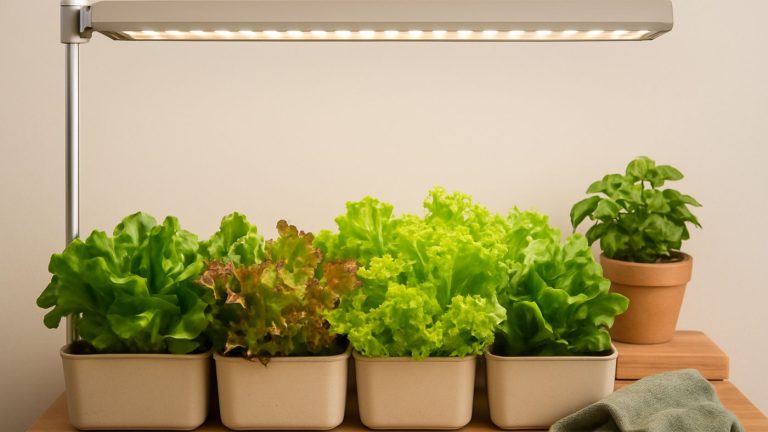
An adjustable LED grow light gives you more control. Position it according to the manufacturer’s instructions, then raise it as the plants grow.
A timer makes the routine easier and prevents the light from being accidentally left on all day or forgotten entirely.
If your greens are growing slowly or becoming leggy, take a closer look at How Much Light Does Indoor Lettuce Need?
How to sow the seeds
How to Grow Salad Greens Indoors with Soil
- Fill the container with damp potting or seed-starting mix.
- Level the surface without packing it down heavily.
- Scatter the seeds according to the spacing instructions on the packet.
- Cover them with the recommended amount of mix.
- Water gently.
- Keep the surface evenly moist until the seeds germinate.
For baby-leaf harvesting, seeds can usually be planted closer together than plants intended to reach full size. Follow the seed packet rather than relying on one spacing rule for every variety.
Label each container with the variety and planting date. This becomes especially useful once several trays of nearly identical green fuzz begin impersonating one another.
Hydroponic method
- Insert the growing sponges or pods into the baskets.
- Add seeds according to the system instructions.
- Fill the reservoir to the recommended level.
- Add nutrients only as directed.
- Set the light height and timer.
- Check the water level regularly.
Avoid adding extra nutrients in an attempt to speed growth. More plant food is not automatically better and may damage young plants.
Not sure which approach fits your space? See our complete comparison of hydroponics vs. soil-grown greens
Watering and feeding
Soil-grown greens
Keep the growing medium consistently damp but not waterlogged. Small indoor containers can dry quickly, particularly under grow lights.
Check moisture by touching the surface of the mix. Water when it begins to feel slightly dry rather than following a rigid calendar.
Whenever possible, water the growing medium rather than repeatedly soaking the leaves. Empty standing water from the drainage tray when necessary.
Fresh potting mix may provide enough nutrition for an initial crop of baby greens. Crops grown longer may benefit from a diluted fertilizer intended for edible plants, following the label instructions.
Hydroponic greens
Monitor:
- Reservoir water level
- Nutrient schedule
- Pump or circulation function
- Root condition
- Algae growth
- System cleanliness
Top up the water according to the manufacturer’s directions. Clean the reservoir between plantings rather than continually carrying old water and root debris into the next crop.
When and how to harvest
You can harvest salad greens at the baby-leaf stage or allow individual plants to grow larger.
For a cut-and-come-again harvest:
- Use clean scissors.
- Cut the outer leaves first.
- Leave the central growing point intact.
- Take only part of the plant at one time.
- Allow it to regrow before harvesting again.
You can also cut a densely planted tray above the growing point and allow the remaining plants to produce another flush of leaves.
Harvest shortly before you plan to use the greens. Wash them under clean running water and dry them thoroughly before storing or serving.
Common beginner problems
Indoor greens are fairly forgiving, but small growing spaces can magnify problems quickly. Check the plants regularly so you can correct issues before they affect the entire crop.
Long, thin, or leaning seedlings
Seedlings that stretch toward the light are usually not receiving enough light.
Try:
- Moving the plants closer to the grow light
- Increasing the daily lighting period
- Rotating containers near a window
- Using a stronger or more evenly distributed light
Avoid placing the light so close that it overheats or scorches the leaves. Follow the manufacturer’s recommended distance as a starting point.
Yellow leaves
Yellow leaves may be caused by:
- Overwatering
- Poor drainage
- Insufficient light
- Nutrient deficiency
- Crowded plants
- Natural aging of older outer leaves
Check the moisture level and root area before adding fertilizer. Feeding an overwatered plant will not solve the underlying problem.
Mold on the soil surface
Surface mold often appears when the growing medium stays wet and air circulation is limited.
To reduce it:
- Allow the surface to dry slightly between waterings
- Improve airflow around the container
- Remove dead leaves and plant debris
- Avoid overcrowding seedlings
- Use clean containers and fresh potting mix
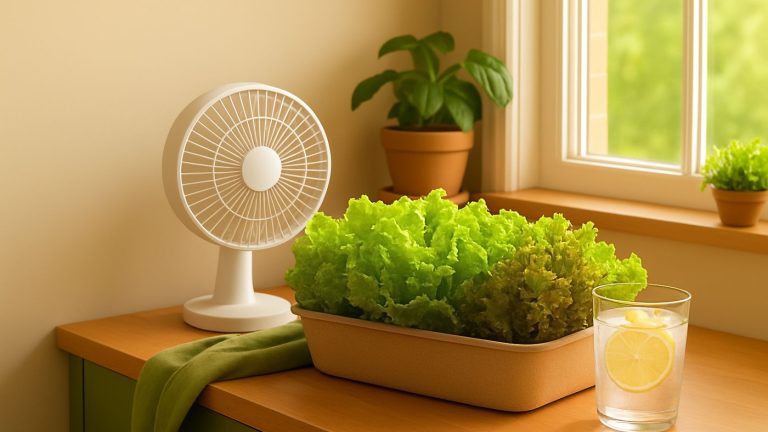
A small fan placed nearby can improve circulation, but it should not blow strongly enough to dry or damage young plants.
Fungus gnats
Fungus gnats are small flying insects attracted to damp growing medium. The adults are irritating, while the larvae live near the soil surface.
Preventive steps include:
- Avoiding constantly saturated soil
- Emptying standing water from trays
- Removing decaying plant material
- Using clean indoor potting mix rather than outdoor garden soil
Lettuce that becomes bitter or bolts
Bolting occurs when lettuce begins producing a flower stalk. Heat, stress, age, and long periods of light can contribute to early bolting.
To slow it down:
- Keep the growing area reasonably cool
- Harvest leaves regularly
- Avoid allowing the container to dry completely
- Choose varieties described as slow-bolting
- Replace older plants with new seedlings
Indoor growing can extend the salad season, but it does not make lettuce immortal. Eventually, each planting will need to be replaced.
Poor germination
When few seeds sprout, possible causes include:
- Old seeds
- Planting too deeply
- Growing medium that dried out
- Excessively wet conditions
- Temperatures outside the variety’s preferred range
- Seeds receiving too little or too much light during germination
Check the packet instructions because different greens have different planting-depth and temperature preferences.
Algae in a hydroponic system
Algae develops when light reaches nutrient-rich water.
To reduce it:
- Avoid allowing leaves and root debris to accumulate in the water
- Cover unused planting openings
- Keep the reservoir protected from direct light
- Clean the system between plantings
- Remove algae before it spreads
Simple starter setups to grow salad greens indoors
The best setup to grow salad greens indoors is not necessarily the most expensive one. Choose the method that fits your space, budget, and preferred level of maintenance.
| Setup | Best for | Main advantage | Main limitation |
|---|---|---|---|
| Budget soil setup | Sunny windows and low budgets | Least expensive | Depends heavily on natural light |
| Soil with grow light | Reliable indoor growing | More control over light | Requires a light and outlet |
| Countertop hydroponics | Convenience and tidy setup | Built-in components | Higher initial cost |
| Indoor growing shelf | Larger or continuous harvests | More growing capacity | Requires more space and planning |
1. Budget soil setup
A basic soil setup may include:
- One shallow planter with drainage
- A waterproof tray
- Fresh potting or seed-starting mix
- Loose-leaf lettuce or salad-mix seeds
- A bright window
This is the least expensive way to experiment with indoor growing. It works best when the window provides strong, dependable light.
2. Soil setup with a grow light
Adding a grow light makes the growing conditions more consistent.
This setup may include:
- One or two shallow planters
- Drainage trays
- Potting mix
- An adjustable LED grow light
- An outlet timer
- Seeds
This method offers more flexibility than a windowsill-only setup and can be expanded by adding shelves or additional lights.
3. Countertop hydroponic setup
A countertop system combines several components into one appliance.
It may include:
- A reservoir
- Built-in lighting
- Growing baskets
- Sponges or pods
- Nutrients
- Water-level reminders
This is a convenient choice for beginners who prefer a contained system and do not want to handle potting mix indoors.
4. Small indoor growing shelf
A shelf setup works well for people who want to grow several trays continuously.
It may include:
- A compact shelving unit
- Grow lights attached beneath each shelf
- Shallow trays or planters
- Waterproof liners
- Timers
- A small circulation fan
This option requires more planning but provides room for staggered plantings and repeated harvests.
Supply checklist to grow salad greens indoors
For a soil-grown setup
- Shallow container with drainage
- Waterproof drainage tray
- Fresh indoor potting mix or seed-starting mix
- Salad-green seeds
- Plant labels
- Small watering can or squeeze bottle
- Bright window or grow light
- Outlet timer, when using a grow light
- Clean scissors for harvesting
For a hydroponic setup
- Countertop hydroponic system
- Compatible grow baskets
- Growing sponges or pods
- Seeds
- Hydroponic nutrients
- Reservoir cover or unused-hole caps
- Cleaning supplies approved for the system
- Clean scissors for harvesting
Optional additions
- Small circulation fan
- Indoor sticky traps
- Spray bottle
- Digital thermometer
- Extra seed-storage containers
- Planting calendar or garden journal
Final thoughts
An indoor salad garden does not need to replace every green you purchase. Even a modest planter can provide fresh leaves, teach you how different varieties grow, and create a dependable rhythm of planting and harvesting.
Begin with one manageable setup. Keep notes on germination, lighting, watering, and harvest dates. Once you understand how greens respond in your particular space, you can add another container, try a hydroponic system, or begin staggering plantings for a more continuous supply.
Once you understand the basic rhythm of light, moisture, and harvesting, it becomes surprisingly easy to grow salad greens indoors year-round.
Ready to plan your setup? I am comparing beginner-friendly planters, grow lights, seed mixes, and countertop hydroponic systems for small indoor salad gardens. Recommendations will be added as each guide is completed.